What’re You Laughing At?
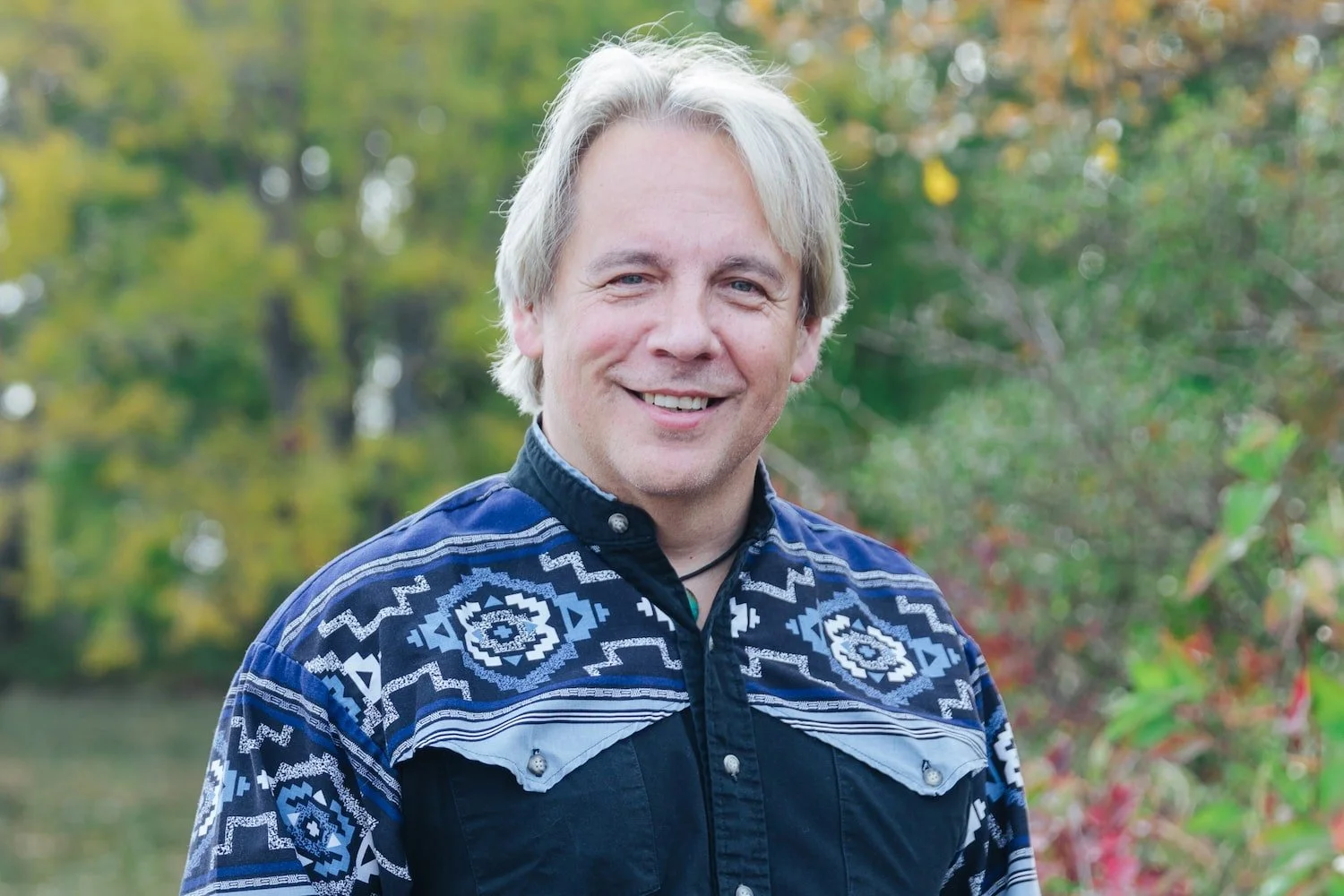
TBPL’s Indigenous Author Series Welcomes Drew Hayden Taylor
By Justin Allec
Drew Hayden Taylor is a bit of a character, but that’s a great fit for Thunder Bay Public Library’s Indigenous Author Series. So far this year, TBPL has hosted three evenings, providing a creative space for readers to connect with upcoming and established Indigenous writers working in a variety of genres and styles. To date, however, the series has mostly concentrated on authors with new releases—Taylor’s visit on June 11 at the Waverley Library will mark the first evening focusing more on a writer’s career, rather than a specific work.
Because of his prolific output as an author, playwright, essayist—and even his forays into television, like hosting APTN’s Going Native—Taylor is a natural choice for the series. “I much prefer speaking about and spreading the gospel of Native literature than doing a workshop,” Taylor says, “since I still don’t have a functional idea how I do things.”
That bit of silly self-deprecation is a feature of Taylor’s, and humour characterizes much of his work; it’s a vital tool that he uses to interrogate the world beyond the Curve Lake First Nation where he grew up. In works like his essay collections, the 20-some plays he’s had produced, or the nearly 40 novels he’s written—including the upcoming crime drama Sucker Falls—Taylor portrays Indigenous folks trying to live, love, and thrive in situations that often turn ridiculous.
While humour is often present in his work, Taylor doesn’t specifically set out to write jokes. “You can’t just write something and call it funny. The laugh has to come out of the situation and the characters,” he says. Prompting that reaction has been one of his main goals as a writer, and also a big reason why he continues to write for the stage. “Theatre is just another form of storytelling, the most direct connection possible with the audience. You see and hear their immediate response to a scene and then they laugh, or they cry,” he says. Taylor sees similarities between a theatre performance and the Indigenous oral storytelling tradition–it’s all about sharing.
As a kid, Taylor recounts dryly that “any encouragement as a writer was lacking,” which meant that he didn’t find his way to writing until his mid-20s, when he was in college. Finally finding an arts scene was revelatory for him, which is why he’s eager to share at these events. “It’s important for creative types, especially youths,” Taylor concludes. “They need to see that you can have success exploring Indigenous viewpoints of life in the arts.”
For more information, visit tbpl.ca.